
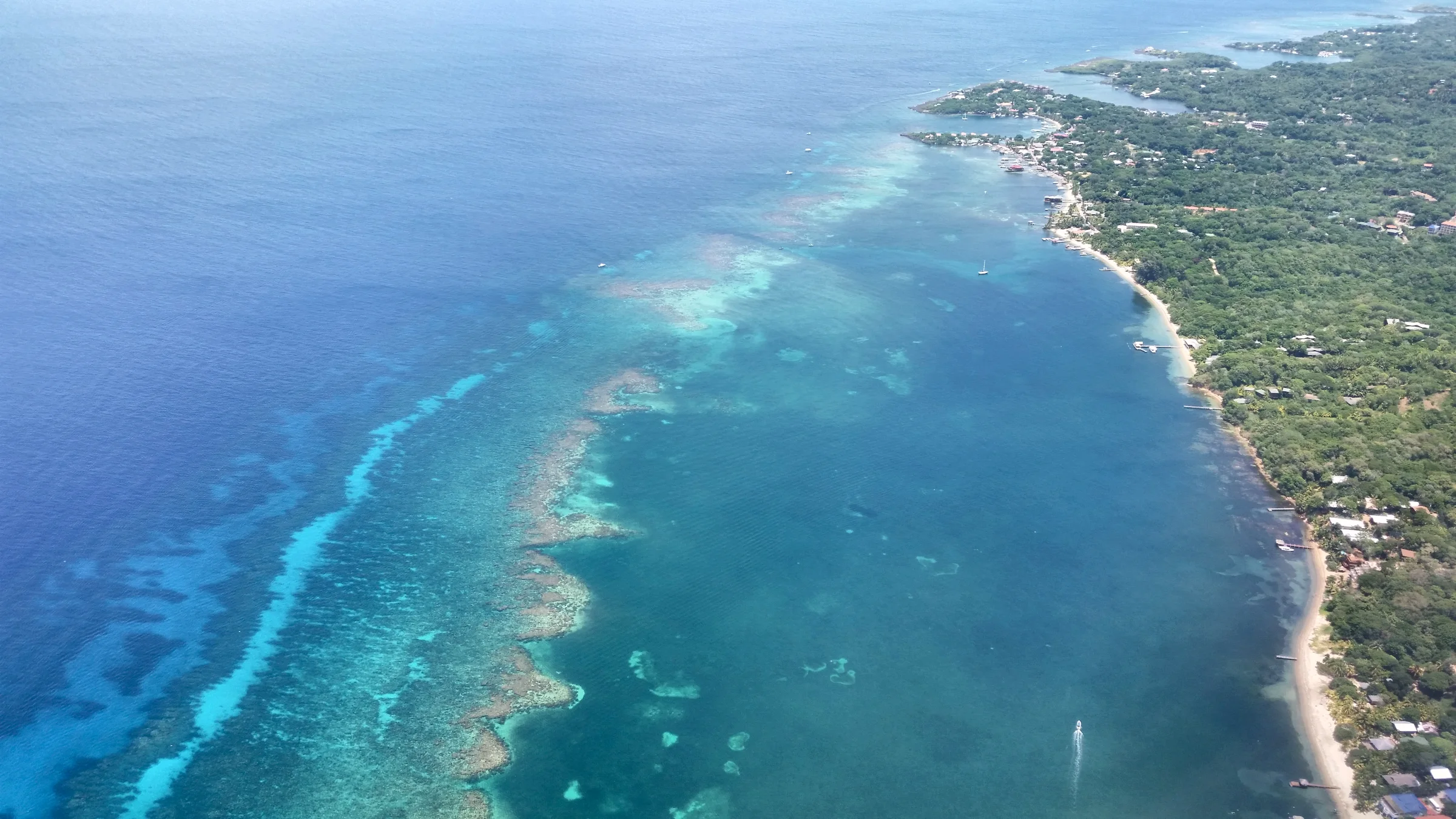
Roatán – Island Gateway on the Mesoamerican Reef
The largest Bay Island sits on the southern edge of the world’s second‑longest barrier reef, offers direct flights from North America, cruise terminals, and a growing focus on responsible diving and snorkeling.
CARACOL · 3 de octubre de 2026 · 3 min
Roatán is the most extensive of Honduras’s Bay Islands, stretching about 59 km in length and less than 8 km at its widest point, and lying roughly 65 km off the Honduran north coast. Its position on the southern edge of the Mesoamerican Barrier Reef System – the second‑longest reef in the world – makes the island a natural hub for marine tourism. An international airport, Juan Manuel Gálvez, links Roatán directly with cities across North America, while two cruise terminals in Coxen Hole and Mahogany Bay (Dixon Cove) welcome vessels from the Caribbean and beyond.
The island’s cultural fabric reflects a long‑standing English‑speaking community; many residents trace their ancestry to families from the Cayman Islands who arrived in the 1830s. Today, both English and Spanish are heard in everyday life, easing communication for visitors and prospective property owners from the United States and Canada.
Diving and Snorkeling with a Conscience
The Roatán Marine Park plays a central role in mitigating these impacts. It has installed mooring buoys and channel markers throughout the island’s dive sites, directing boats and divers away from fragile structures and reducing the risk of anchor damage. By following the designated routes, snorkelers and divers can enjoy the underwater scenery while minimizing their footprint.
The park also runs an education program that offers guided reef tours and snorkeling sessions for students. These activities provide hands‑on insight into the challenges facing the reef and promote low‑impact habits that participants can carry into future dives.
Best Practices for Underwater Visitors
- Avoid touching or stepping on corals. Even light contact can harm delicate polyps and encourage algal overgrowth.
- Maintain neutral buoyancy. Proper buoyancy control, aided by a well‑fitted buoyancy‑control device and steady breathing, helps keep you clear of the substrate.
- Rinse gear with fresh water before entering the water. Cleaning wetsuits and equipment reduces the introduction of contaminants.
- Do not feed marine life. Artificial feeding can disrupt natural foraging patterns and create dependence.
Getting Around and Staying
Because Roatán is an island, arrival is limited to air travel via Juan Manuel Gálvez International Airport or a ferry from La Ceiba on the mainland. Once on the island, rental cars, taxis, and local shuttles provide access to beaches, towns, and dive sites. For accommodation options ranging from beachfront villas to boutique hotels, see CARACOL’s guide to where to stay in Roatán: Where to stay in Roatán.
If you prefer a structured experience, CARACOL lists several vetted marine‑focused tours. One popular choice is the Roatán 3‑Stop Snorkeling Adventure, Shipwreck, Starfish & Blue Channel, which highlights several of the island’s most celebrated underwater locales.
Investing in the Island’s Future
Tourism underpins Roatán’s economy, with diving, beach recreation, and cruise traffic driving demand for services and accommodations. The island’s English‑language heritage and direct flight connections make it attractive for buyers seeking a beach home or holiday rental that can benefit from existing visitor flows.
For a deeper look at the property market and legal considerations for foreign buyers, consult CARACOL’s guide: Buying property in Roatán.
Before you go
Book your flights to Juan Manuel Gálvez International Airport through Kiwi.com and consider downloading a Honduras eSIM from Airalo before you land. Travel insurance can be arranged via EKTA.